
Fire Sprinkler System: The Ultimate Safety Solution
Understanding the Importance of Fire Sprinkler Systems
You’ve seen it in a hundred movies: a character pulls a fire alarm, and every sprinkler in the building unleashes a torrential downpour. It makes for great drama, but when it comes to a real fire sprinkler system, that scene is pure fiction. The truth is far smarter, less chaotic, and significantly more effective at saving lives and property.
Instead of activating all at once, each sprinkler head acts as an independent, heat-sensitive firefighter. They don't respond to smoke or a manual alarm; they are triggered only by a significant rise in temperature in their immediate vicinity. This intelligent design means that in the vast majority of real-world fires, only the one or two sprinklers directly above the flames ever activate. This targeted approach is the key to effective fire damage prevention. While Hollywood depicts a building-wide flood, industry data consistently shows that most fires are controlled or even extinguished by just a single sprinkler head.
A lone sprinkler uses a fraction of the water a fire department hose does, protecting the rest of the property from both the fire and unnecessary water damage. These silent guardians rely on a surprisingly simple mechanism that has little to do with building alarms and everything to do with basic physics, allowing each sprinkler to stand guard as your first line of defense.
How Fire Sprinklers Actually Work: The One-at-a-Time Rule
The real trigger for a sprinkler isn't smoke or a manual alarm; it’s high heat. Think of each sprinkler system on the ceiling as a tiny, independent firefighter waiting patiently for a fire directly below it. Until it senses a significant rise in temperature—usually between 135 to 165°F (57-74°C)—it will do absolutely nothing.
Because of this design, only the sprinkler head directly above a fire will activate. The heat from a growing fire rises, and once it’s hot enough to burst a small, heat-sensitive glass bulb or melt a metal link in that one sprinkler head, water is released. The other sprinklers in the room and throughout the building remain off, completely unaffected.
This one-at-a-time strategy is the system’s secret weapon. By activating only where needed, it attacks a fire at its source while protecting the rest of the property from water damage. In fact, studies show that over 90% of fires are contained by just a single sprinkler head. It’s not about flooding a building; it's about surgically stopping a fire before it can grow. For larger premises, consider professional firefighting and protection systems support for surveys, design, and implementation.
A Closer Look: The Simple Genius Inside a Sprinkler Head
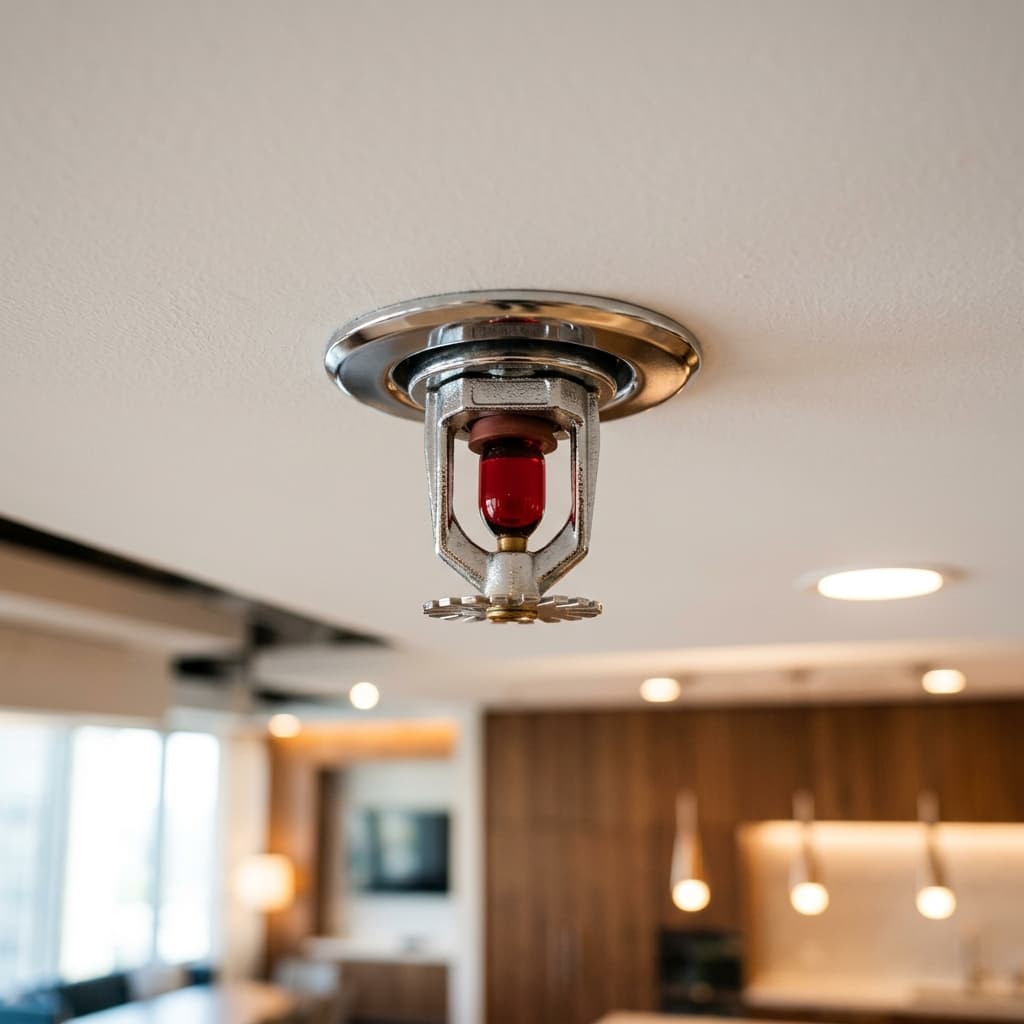
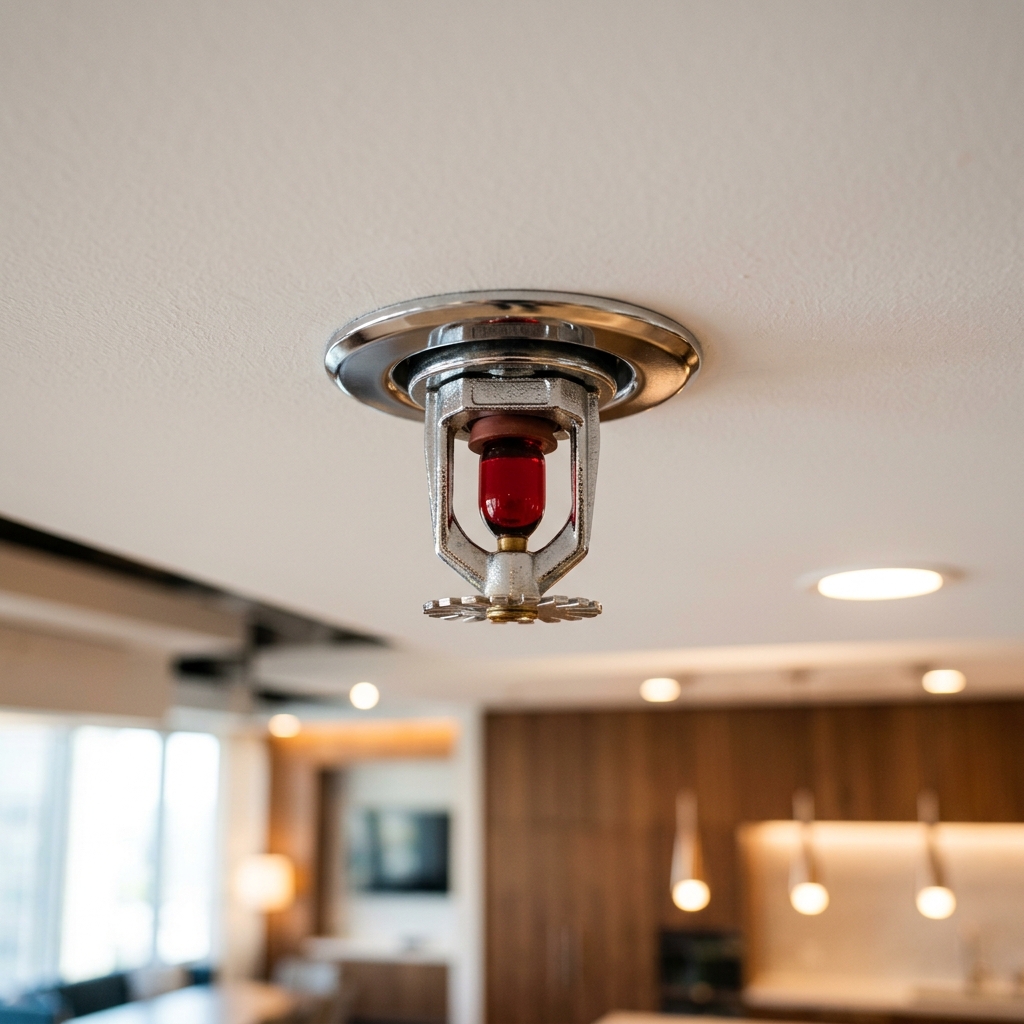
Inside these individual, heat-activated guardians is a simple, heat-sensitive plug. If you look closely at most common sprinkler heads, you’ll see a small glass bulb filled with a colored liquid. In other designs, you might spot a tiny metal piece holding the cap in place; this is called a fusible link. Both components do the exact same job: they keep a high-pressure water supply securely sealed off until a real fire breaks out.
This little trigger is remarkably precise, engineered to break only when the surrounding air reaches a temperature between 135 and 165°F (57-74°C). That’s significantly hotter than steam from a shower or the air in a stuffy room, ensuring a sprinkler only activates from the intense heat of an actual fire, not from burnt toast.
The entire activation process is a beautifully simple chain reaction that relies on basic physics, not complex electronics that could fail:
- A fire starts, and the superheated air and smoke rise directly to the ceiling.
- The intense heat envelops the sprinkler head, warming the liquid inside the glass bulb.
- Once the liquid reaches its target temperature, it expands and instantly shatters the glass bulb.
- With the bulb gone, the plug it held in place is released, and pressurized water immediately sprays downward onto the fire.
There are no buttons, computers, or remote signals involved—just a foolproof mechanical release. This elegant simplicity is what makes sprinklers so incredibly reliable at stopping a fire in its tracks. You can find essential fire protection products to match your safety needs.
But What About the Water Damage? A Reality Check
The concern that a sprinkler will cause a huge mess and ruin everything is understandable, but the reality of the water involved is the most powerful argument for sprinklers, not against them.
Let’s put the numbers in perspective. A single sprinkler head that activates to control a fire releases about 15 to 25 gallons of water per minute—roughly the flow of a strong garden hose. Now, consider the alternative: firefighters arriving to a more advanced fire. A standard fire hose unleashes over 250 gallons of water per minute with far more force and pressure. That’s more than ten times the water, aimed at a fire that has already caused significantly more damage.
This difference highlights the true benefit of automatic fire suppression. A sprinkler attacks a fire when it is small and manageable, often putting it out before it has a chance to spread. The small amount of water from a sprinkler represents a successful intervention, not a catastrophe. It’s the difference between cleaning up a single room and dealing with catastrophic fire, smoke, and water damage throughout an entire building.
Wet vs. Dry: Adapting Sprinklers for Cold Environments
The problem of water freezing in pipes is why not all sprinkler systems are the same. In most temperature-controlled buildings, a wet pipe system is the standard. The pipes are always filled with water under pressure, ready to be released the instant a sprinkler head activates. This simple, reliable setup is perfect for the majority of spaces we occupy every day.
For colder environments, engineers use a clever solution called a dry pipe system. You’ll find these in unheated parking garages, loading docks, or attics where temperatures can drop below freezing. In a dry system, the pipes are filled with pressurized air, not water. The water is held back by a valve in a heated part of the building. When a sprinkler head bursts, the air rushes out first. This sudden drop in air pressure acts as a signal, tripping the main valve and allowing water to flood the pipes and spray only from the open sprinkler. If you need a fire protection system supplier to evaluate your site, contact our experts.
While a dry system has a brief delay—usually less than 60 seconds—it is engineered to ensure water still reaches the fire fast enough to be highly effective. This smart design ensures that every space, regardless of temperature, can have the same life-saving protection.
The Lifesaving Numbers: Proving the Power of Sprinklers
Their true value is measured in lives saved and property protected. According to the National Fire Protection Association (NFPA), the risk of dying in a fire is more than 80% lower in buildings equipped with fire sprinklers. This single fact highlights the immense benefit of turning a potentially fatal event into a manageable incident.
A smoke detector is a lookout—it can spot danger and sound an alarm, but it can't fight the fire itself. A fire sprinkler, in contrast, is an automatic firefighter—making professional firefighting and protection systems planning even more effective. It doesn't just alert; it acts. This is the critical distinction between passive alerts and active protection, and it's why the two systems work so powerfully together.
Beyond saving lives, sprinklers are also masters of damage control. Because they activate individually and directly over a fire, they often extinguish it with just one or two heads. Data shows that in buildings with sprinklers, fires are contained to the room where they started 97% of the time. This prevents a small kitchen mishap from destroying an entire commercial building or apartment complex.
The Silent Guardians You Can Trust
The next time a movie character triggers a building-wide downpour, you’ll know it’s fiction. The discreet disc on the ceiling is no longer a mystery but a clever piece of technology designed for a precise, surgical response. You know that only the sprinkler directly in the path of a fire's high heat will activate, protecting property by using a fraction of the water a fire hose would.
This technology, maintained through strict inspection requirements, is designed for one purpose: safety. So look up the next time you’re in an office or hotel. Instead of uncertainty, you can feel a quiet confidence, knowing that a smart and reliable guardian is standing by to protect you. Explore complete fire protection options to match your building’s risk level and compliance needs.
Protect Your Property Today
Ready to upgrade your building's fire safety with a professional sprinkler system?