
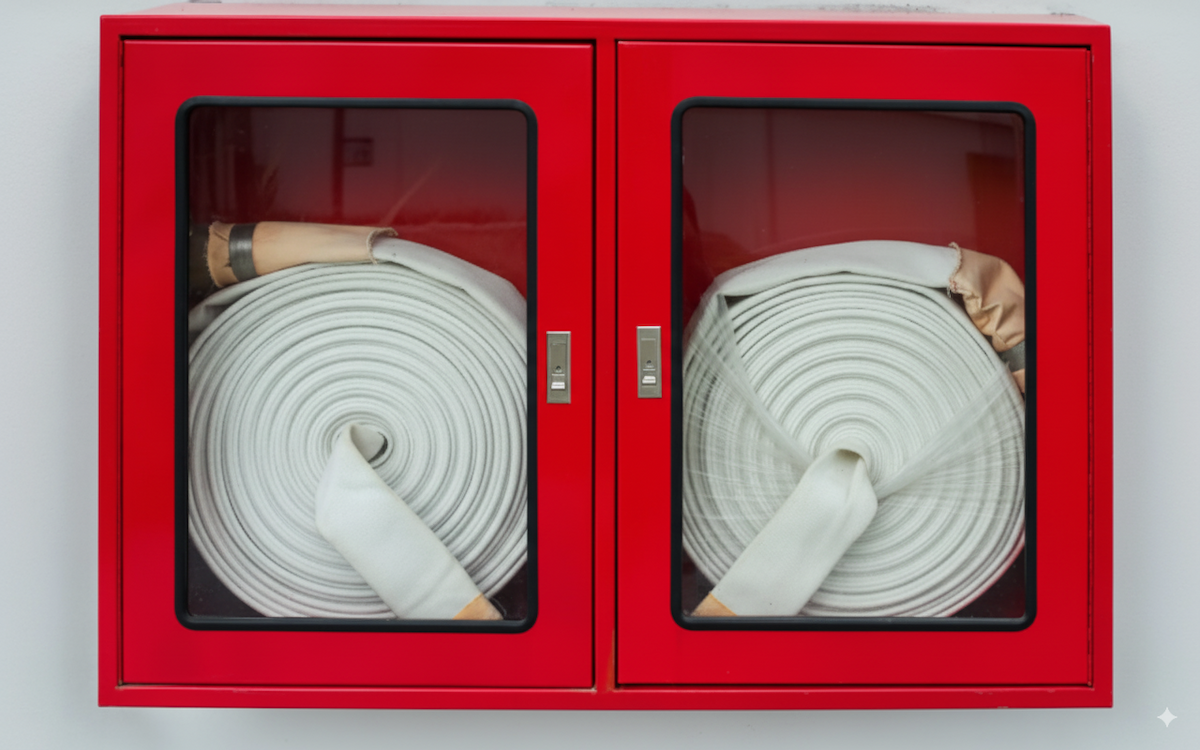
High-pressure fire hydrant system for emergency firefighting
Flow Rate
200 GPM
Pressure
Up to 200 PSI
Type
Underground Hydrant
Material
Cast Iron
High-pressure fire hydrant system designed for emergency firefighting operations. Provides reliable water supply for fire departments and emergency responders.
High Flow Capacity
Delivers up to 1000 GPM for effective firefighting
Durable Construction
Cast iron construction for long-lasting performance
Quick Connection
Standard fire department connections for rapid deployment
| Connection Size | 4.5" Storz |
| Operating Pressure | 150-200 PSI |
| Installation | Underground/Above Ground |


Explore other fire protection solutions that might complement your Fire Hydrant System needs.

Complete fire suppression system with automatic sprinklers

Central control panel for fire detection and alarm systems

Wall-mounted cabinet for fire extinguisher storage and protection
During a large-scale fire emergency, municipal water lines and standard fire extinguishers are often insufficient to control the intense heat and rapidly spreading flames. In these critical moments, a professional-grade fire hydrant system serves as the backbone of emergency response. Providing high-volume, high-pressure water directly to the scene, this system allows emergency teams and firefighters to combat fires effectively and protect surrounding structures. At JS Engineers, we are a leading fire hydrant supplier and certified fire hydrant contractor, offering comprehensive fire hydrant installation, testing, and certified fire hydrant maintenance solutions across Pakistan.
A fire hydrant system is an active fire protection infrastructure consisting of a network of pipes, water supply valves, connection points, and specialized fire hydrant equipment installed around or inside a facility. The system is designed to provide rapid access to water for manual firefighting operations. Connected to a dedicated water reservoir and pressurized by specialized fire pumps, hydrants act as accessible outlets where firefighters can connect high-pressure hoses to deliver continuous streams of water.
The piping network of a hydrant system typically forms a closed loop around the facility's perimeter. This ring-main design ensures that water can reach any individual hydrant from multiple directions, minimizing friction losses and ensuring that a pipe break in one section of the loop does not shut down the entire system. High-Density Polyethylene (HDPE) or Ductile Iron pipes are typically buried underground to form this network, selected for their exceptional resistance to soil corrosion and ability to handle sudden pressure surges.
In the design of modern fire safety frameworks, two main types of hydrants are utilized based on regional weather conditions and architectural requirements:
As an experienced fire hydrant contractor in Pakistan, JS Engineers designs and implements robust hydrant networks that comply with NFPA 24 standards, ensuring your facility has an uninterrupted, high-capacity water distribution system ready for any emergency.
Need a certified hydrant network layout or specialized maintenance calculations for your industrial facility? Contact JS Engineers today.
JS Engineers supplies premium fire hydrant equipment sourced from global manufacturers. Every fire hydrant solution we install features:
Constructed from heavy-duty Cast Iron or Ductile Iron, engineered to withstand high hydraulic pressure, mechanical impact, and harsh weather conditions.
Internal operating stems, valves, and outlets are lined with bronze to prevent rust and ensure smooth operation even after years of inactivity.
Equipped with a 4.5-inch Storz pumper connection and dual 2.5-inch threaded landing valves, ensuring compatibility with municipal fire engines.
Utilizing high-grade EPDM rubber seals and O-rings to prevent water leaks and maintain constant system pressure.
The pentagonal operating nut is designed to prevent unauthorized tampering while allowing quick access with standard firefighter tools.
Integrated automatic drain valves in dry-barrel models, and coated with high-visibility, UV-resistant red polyurethane paint to prevent rusting.
Implementing a professional fire hydrant system Pakistan provides substantial benefits for industrial and commercial facilities:
Hydrants deliver massive water volumes (often exceeding 500 to 1000 GPM) to extinguish large fires that standard systems cannot control.
Strategically placed hydrants allow firefighters to connect and start suppression operations within minutes of arriving at the site.
High-pressure streams allow teams to create water shields, preventing the fire from jumping to adjacent buildings or fuel tanks.
Insurance companies offer significant discounts to properties protected by code-compliant, certified fire hydrant networks.
Installing a certified hydrant system is mandatory for securing civil defense clearances and commercial occupancy permits in Pakistan.
Built from heavy-duty materials, a well-maintained hydrant system can protect a facility for decades with minimal maintenance.
By containing fires externally before they breach the building envelope, a hydrant system minimizes clean-up times and allows businesses to resume operations quickly.
Factories handling flammable chemicals, textiles, or paper products require extensive perimeter hydrant networks to control high-hazard fire scenarios.
Large-scale storage spaces with high-piled stock require external hydrants to complement indoor sprinkler systems and provide external defensive coverage.
Oil and gas facilities demand high-pressure hydrant networks equipped with foam monitors to suppress flammable liquid fires.
Buildings require internal wet riser systems and external hydrants to ensure firefighters can transport water to upper levels. Terminals and airports utilize heavy-duty hydrants to safeguard high-density zones.
Design standards, sizing guidelines, and materials verified for long-term safety.
| Parameter | Specification Detail |
|---|---|
| Design Standard | NFPA 24 / AWWA C502 (Private Mains Installation) |
| Body Material | Cast Iron (GG25) / Ductile Iron (GGG40) (ASTM A126 / A536) |
| Working Pressure | 16 Bar (235 PSI) working, 24 Bar test (UL 246 / FM Approved) |
| Inlet Connection | 6-inch Flanged / Mechanical Joint (ANSI B16.1 Class 125) |
| Hose Outlets | 1x 4.5" Storz, 2x 2.5" NST Threaded (NFPA 1963) |
| Internal Valve | Compression type closing with system pressure (AWWA C502) |
| Interior Coating | Fusion Bonded Epoxy (FBE) (AWWA C550) |
| Operating Stem | High-tensile brass or stainless steel (ASTM B124 / A276) |
At JS Engineers, we provide complete engineering and equipment support to diverse sectors: